
Somewhere between your first booster pack and your five-hundredth, a collection stops being fun and starts being a pile. Cards get bent, duplicates multiply, and you have no idea whether that box in the closet is worth $20 or $2,000. Learning how to organize Pokémon cards is what turns that pile back into a collection you can actually enjoy, protect, and value.
The good news: you do not need an expensive setup or a whole weekend. You need a system that separates what matters from what does not, stores each tier appropriately, and keeps a record you can search. Here is how to build one that you will actually maintain.
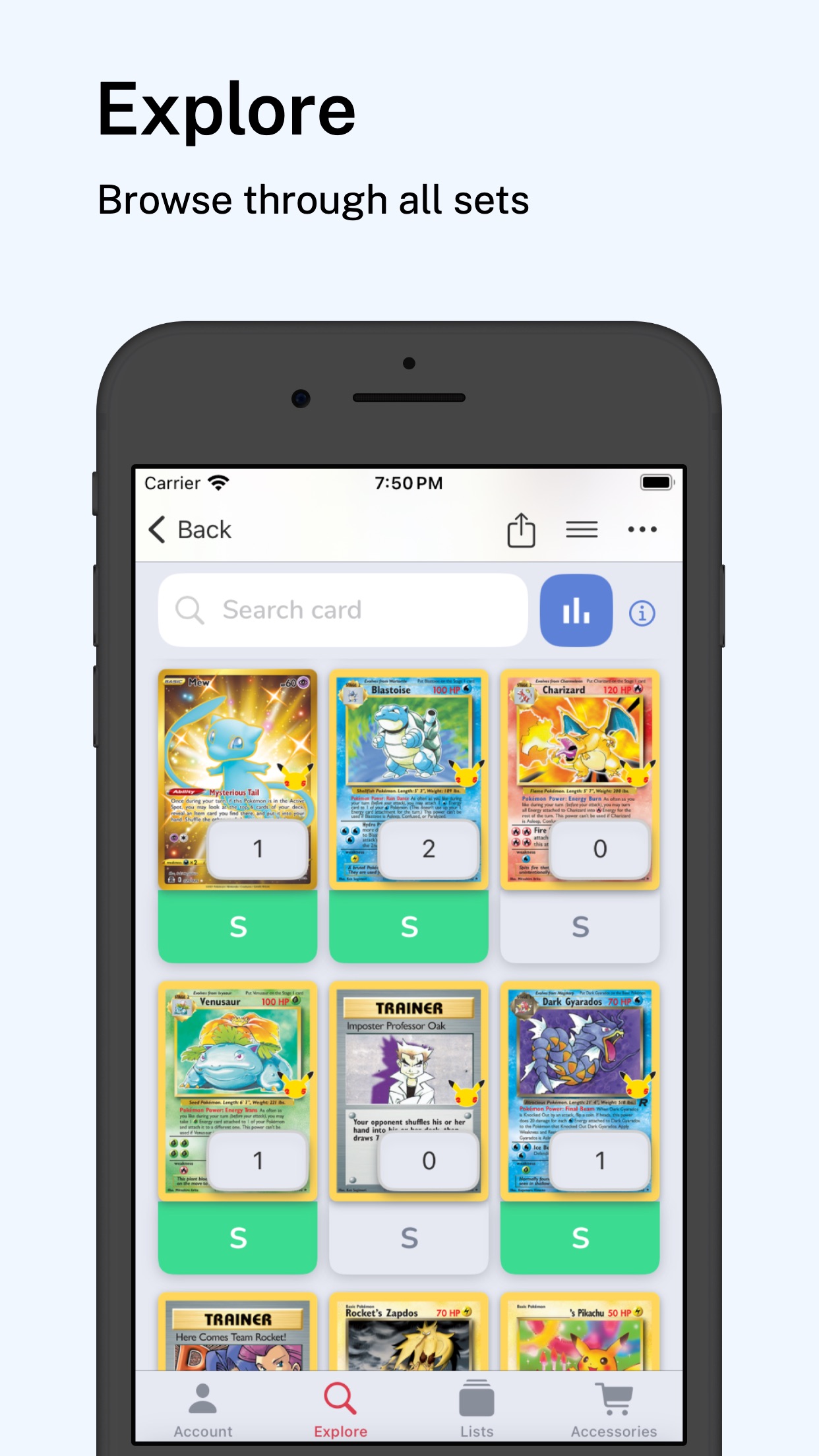
Start with a searchable inventory. Scan your best cards into the Pokémon card scanner to build a digital collection with live values - then organize the physical cards around it.
Step 1: Split keepers from bulk
Before you sort anything by set or type, make one brutal division: keepers and bulk.
- Keepers are cards you care about - holos, full arts, cards of your favorite Pokémon, anything valuable, and anything with sentimental value.
- Bulk is everything else: commons, uncommons, duplicate energy cards, and the near-endless reverse holos that clog every collection.
This one split saves you hours. There is no reason to sleeve and binder a common Rattata, and no reason to leave a $60 alt art loose in a box. Do this pass first and every later decision gets easier.
Step 2: Choose a sorting strategy for your keepers
There is no single “correct” order - the best method depends on how you collect. Here are the common approaches and when each makes sense.
| Sort method | Best for |
|---|---|
| By set + card number | Set collectors and clean binders that mirror the official checklist |
| By type / energy | Fans who collect all Fire, Water, or Dragon cards across sets |
| By Pokédex number | Collectors chasing a favorite Pokémon or building a “living dex” |
| By rarity | Showcasing your chase cards - holos and full arts up front |
| By value | Prioritizing protection and quick access to your most expensive cards |
| Alphabetical | Simple lookup when you do not track sets closely |
Most collectors land on a hybrid: by set and number for the main binder, with a separate “top hits” page or box sorted by value. If you collect one Pokémon, Pokédex order across sets feels more natural than chopping it up by set.
Pick the method that matches how your brain looks for a card. If you always think “where’s my Charizard,” sort by Pokémon. If you think “I need the last three cards from that set,” sort by set.
Step 3: Build a digital inventory
Physical order tells you where a card is. A digital inventory tells you what you have and what it is worth - and it is the single biggest upgrade you can make.
Scan your keepers into TCG Companion and each card becomes a searchable entry with a live market price attached. That gives you three things a binder cannot:
- Search. Type a name and find it instantly instead of flipping pages.
- Duplicate detection. See at a glance that you already own three of a card before you buy a fourth.
- A running total. Watch your collection value update as prices move, without recounting anything.
Do the scanning pass as you sort your keepers - card in hand, scan, then sleeve. You only handle each card once. When you are done, you have both a tidy binder and a valued database.
Not sure what a card is worth before you file it? Use the Pokémon price checker to see raw and graded values in seconds.
Step 4: Store each tier the right way
Different cards deserve different protection. Match the storage to the value.
Valuable singles. Every card worth protecting goes into a soft penny sleeve, then into a rigid toploader or a screw-down one-touch holder for your best pieces. Store them upright, not stacked flat under weight.
Keepers. A binder with side-loading pocket pages is ideal. Side-loading (rather than top-loading) pockets stop cards from sliding out if the binder tips. Avoid cheap PVC pages, which can damage cards over time - look for archival-safe polypropylene.
Bulk. Cardboard storage boxes (the classic 400- or 800-count boxes) are perfect. Keep bulk loosely sorted by set so you can still find things, but do not waste sleeves on commons.
One detail that trips people up: sleeve and toploader sizes. Standard Pokémon cards fit standard sleeves, but if you are unsure what fits, our guide to Pokémon card size covers the exact dimensions and which sleeves match.
Step 5: Protect against the slow killers
Most card damage is not dramatic - it is slow. Guard against the three quiet enemies:
- Light. UV fades ink and holo foil. Keep binders and boxes closed and out of direct sun.
- Humidity. Damp air warps cards and invites mildew. Aim for a stable, dry room - avoid basements, attics, and garages.
- Heat. Warmth curls cards and softens sleeves. Keep them at room temperature, away from radiators and windows.
For your most valuable cards, grading offers the ultimate protection: a sealed, tamper-evident slab. If that is on your radar, see how to grade Pokémon cards.
Step 6: Keep the system maintainable
The best organization system is the one you will still use in six months. Keep it low-effort:
- Scan new cards the day you get them. A pack opened today, scanned today, never becomes an unsorted pile.
- Sleeve hits immediately. Pull anything valuable from a new pack straight into a sleeve before it touches the table.
- Do a quick sort monthly. Ten minutes filing loose cards beats a four-hour cleanup twice a year.
Organization is not a one-time project - it is a light habit. Set the system up once, keep a scanner in your pocket, and your collection stays searchable, protected, and valued with almost no ongoing effort.