
Pick up any Pokémon card and look at the bottom edge. Tucked next to the card number is a tiny icon that carries a lot of information: it tells you exactly how rare the card is. Learning to read these Pokémon card rarity symbols turns a pile of cardboard into something you can quickly sort, value and hunt.
This guide gives you a clear rarity chart, explains the difference between the set symbol, the rarity symbol and the collector number, and covers the newer tiers introduced in the Scarlet & Violet era. Naming has shifted a lot over the years, so we will also show you the fastest, most reliable way to check any card.
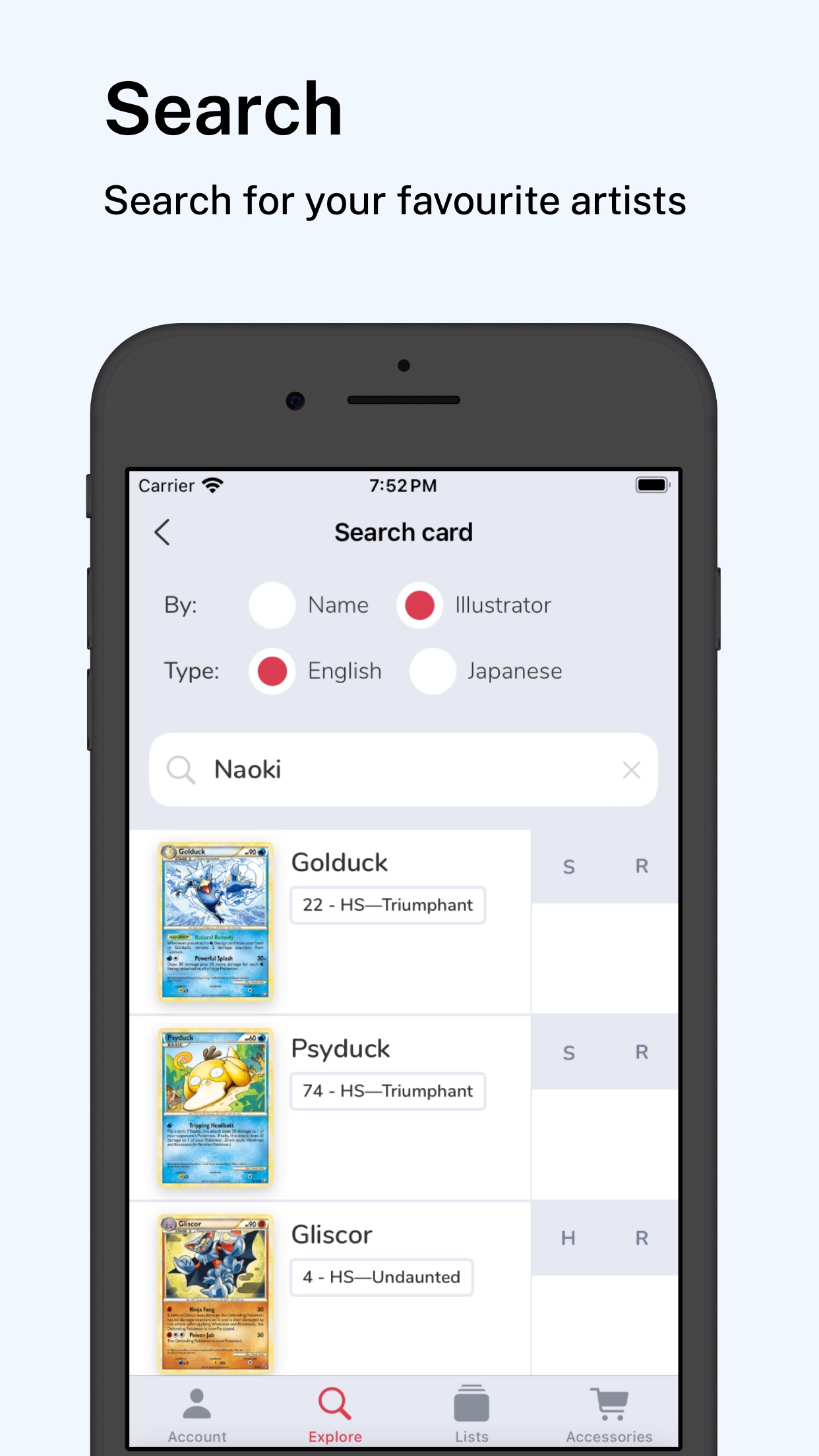
The quickest way to read a card is to let the app do it. Scan it with the Pokémon card scanner and it will show the exact set, number, variant and rarity in seconds.
Where to find the rarity symbol
The rarity symbol sits at the bottom of the card, usually in the bottom-right corner, next to the card number. On older and most modern cards it is a small shape or icon printed right beside the collector number (for example, next to “4/102”).
Once you know where to look, you can read a card without even flipping it over.
Pokémon card rarity chart
The classic symbols have been consistent for decades and are the foundation for everything else.
| Symbol | Meaning |
|---|---|
| Circle | Common |
| Diamond | Uncommon |
| Star | Rare |
| Black star + “PROMO” | Promotional card |
| Star variants / holo | Special or holo Rare |
Historically, a black star meant Rare, and holofoil or special versions used star variants. In some eras a white star signalled a promo or shiny card. These basics still apply to the vast majority of cards you will handle.
Set symbol vs rarity symbol vs card number
Three different markings live near the bottom of a card, and mixing them up is common. Here is how they differ:
- Set symbol - a small icon that identifies which set the card is from. Each expansion has its own symbol.
- Rarity symbol - the circle, diamond or star that shows how rare the card is.
- Collector number - a number like 4/102 showing the card’s position within the set (card 4 of 102).
Note that promos and some older sets do not follow the rules perfectly. Base Set cards, for example, can lack a set symbol entirely, which is actually a useful clue that a card comes from the earliest era.
Modern Scarlet & Violet rarity tiers
The Scarlet & Violet era expanded the rarity ladder well beyond circle, diamond and star. You will commonly hear these tiers:
- Double Rare - the ex cards.
- Ultra Rare - full-art and special cards.
- Illustration Rare - alternate-art style cards with expanded artwork.
- Special Illustration Rare - premium alternate-art cards, highly sought after.
- Hyper Rare - the gold cards that sit at the top of a set.
These newer tiers use their own symbols and styling, which is part of why the “just look for a star” rule of thumb no longer tells the whole story on recent cards.
Promos and special cases
Promo cards are marked with a black star and the word “PROMO”. They are distributed outside normal booster packs - through events, boxes, tins and giveaways - so they do not fit neatly into the standard circle/diamond/star system. Some promos are common giveaways; others are genuinely scarce. The marking tells you what kind of card it is, but not automatically how valuable it is.
The fastest way to check
Because official rarity naming has changed a lot over the years - and because promos and older sets break the usual patterns - the symbol alone will not always give you a complete answer. The most reliable approach is to identify the exact card, including its set, number and variant, and then read its rarity from there.
That is exactly what scanning does. The app reads a scanned card and shows its exact set, number, variant and rarity, so you do not have to memorise every symbol change across every era.
Curious what a rare pull is actually worth? Look it up with the Pokémon price checker to see live raw and graded prices.