Japanese Pokémon cards have gone from a niche import to a core part of the hobby. Collectors chase them for the crisp print quality, the exclusive sets and artwork that never reach the West, and singles that are often cheaper than their English counterparts. But Japanese Pokémon card prices follow their own logic - and if you value them like English cards, you will guess wrong.
This guide covers why Japanese cards are so popular, how their sets and rarities differ, what actually drives their value, and how to check a real price instead of a rumor.
Have a Japanese card in hand? Point the Pokémon card scanner at it to identify the card and pull up its market price in seconds.
Why Japanese cards are so popular
Three things drive the demand:
- Print quality. Japanese cards are widely regarded as having sharper printing, better centering on average, and richer holo foil than English releases. For collectors chasing high grades, that matters.
- Exclusive sets and art. Japan gets sets, promos, and alternate artwork that are never printed in English, or arrive months later in a reshuffled form. Some of the most sought-after illustrations in the hobby are Japan-only.
- Price spread. Because Japanese print runs are often larger and singles are sold heavily, everyday cards tend to be cheaper - while the true chase cards can be more expensive than anything English. It is a market of accessible commons and premium hits.
How Japanese sets and rarities differ
If you only know the English lineup, Japanese releases can feel unfamiliar. English sets are frequently combinations of two or more Japanese sets, so a single English set may map to several smaller Japanese ones with different names and card numbers.
Rarities differ too. Japanese cards use their own set of rarity markings and chase tiers, and the highest rarities - the special art and secret-rare style cards - are printed in smaller numbers relative to the base set. That scarcity at the top is a big part of why the ceiling on Japanese prices can be so high even when the floor is low.
The practical takeaway: do not assume a Japanese card maps one-to-one to an English card you know. Treat it as its own card, in its own set, with its own price.
How to check Japanese Pokémon card prices
The reliable way to check a value is to look at what the exact card actually sells for - not a wishlist asking price.
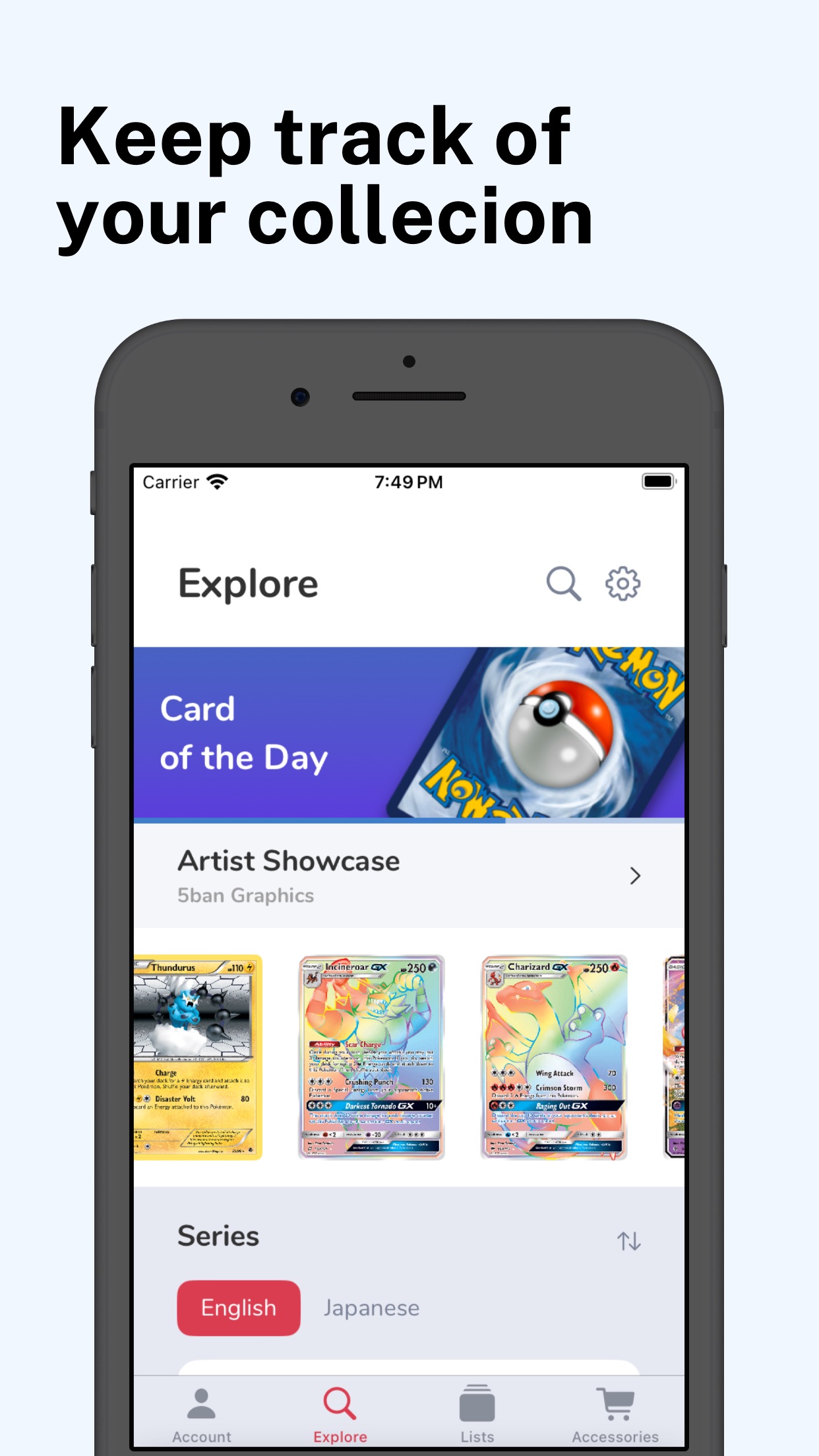
TCG Companion indexes Japanese Pokémon cards with a separate set browser and their own market prices. That means you can:
- Scan the card with your camera to identify it and see its value instantly, even if you cannot read the Japanese text.
- Browse Japanese sets directly to find a card by set and number.
- See prices grounded in real sold listings, so the number reflects the actual market rather than the most optimistic seller.
Because Japanese values live separately from English ones in the app, you get the right price for the card in your hand - not the English version’s price by accident.
Want to sanity-check a value fast? The Pokémon card value checker shows raw and graded prices so you know where a card really sits.
What drives Japanese card value
Once you can see a price, it helps to understand why it is what it is. The main factors:
- Rarity and chase status. Special art rares, secret rares, and alt arts sit far above base cards from the same set. Rarity is the single biggest lever.
- Alternate artwork. Japan-exclusive illustrations - especially the character-focused special art cards - are among the most demanded pieces in the entire hobby.
- Sealed product. Unopened Japanese boxes and packs carry a premium of their own, driven by both collectors and those hoping to pull chase cards.
- Condition and grading. Because Japanese print quality is high, top grades are attainable and highly valued. A graded gem-mint Japanese chase card can sell for a large multiple of its raw price. See how grading affects value.
Value is the product of all four. A common in a beat-up condition is worth little; a graded alt art in gem mint can be a centerpiece.
Myth-busting: size and “worth more”
Two myths cause endless confusion.
“Japanese cards are a different size.” They are not. Japanese Pokémon cards are the same physical dimensions as English cards - only the back design, text, and set symbols differ. Standard sleeves and toploaders fit both. If you want the exact measurements, our Pokémon card size guide has them.
“Japanese cards are always worth more.” Also false. On average, common and uncommon Japanese singles are cheaper than English because of larger supply. The premium shows up only at the top of the rarity ladder. So “is it Japanese?” is the wrong question - “which exact card, and in what condition?” is the right one. Check the specific card every time.
The bottom line
Japanese cards reward collectors who do a little homework: gorgeous print quality and exclusive art at the top, genuinely affordable singles at the bottom, and a price structure that does not mirror the English market. Identify the exact card, check its own market price, and factor in rarity, art, and condition - and Japanese cards become one of the most rewarding corners of the hobby.